When cash-for-keys makes sense (and when it does not)
A practical look at cash-for-keys offers for small landlords: when they can help, and when they backfire.
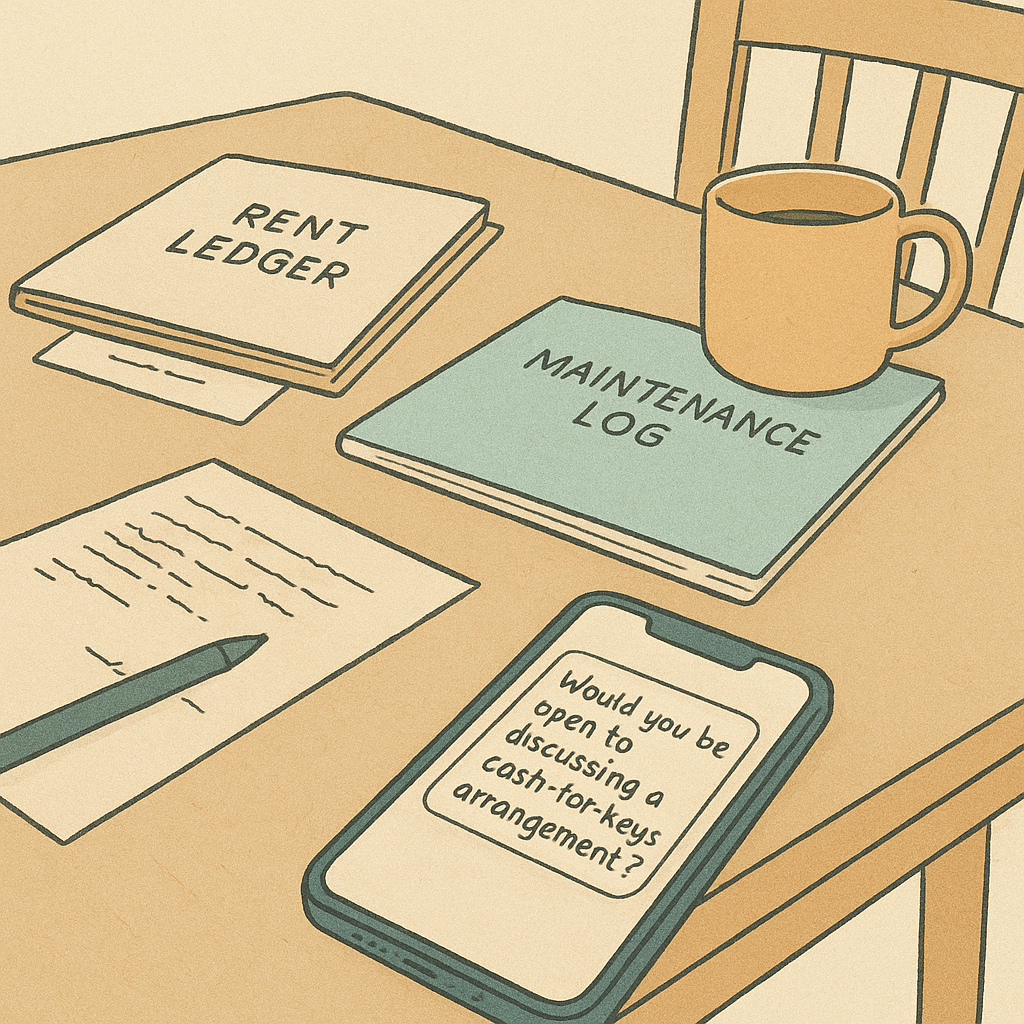
Cash-for-keys can feel like a blunt instrument in a calm, often stubborn, landlord world. It isn’t a magic fix, but in the right circumstances it can save time, money, and a lot of headache. The question to anchor your decision is simple: should you offer money or other concessions to a tenant in exchange for an orderly, quick move-out? The answer isn’t universal. It depends on the specific situation, your local rules, and what you’re trying to protect beyond the next tenant.
This article focuses on a single, practical question: when does cash-for-keys (CFK) make sense for a landlord, and when would you be better off saying no and sticking to your usual eviction, notice, and turnover process? It isn’t legal advice, and it isn’t jurisdiction-specific guidance. It’s a real-world lens on a tool that has both potential benefits and real risks.
Why cash-for-keys surfaces as an option
- Time pressure: If a unit must be emptied quickly for renovations, major repairs, or to re-rent, CFK can shortcut a drawn-out eviction process.
- Tenant behavior: If a tenant is unresponsive, causing delays, or actively hostile to the idea of leaving, a negotiated exit can be faster and less costly than a formal eviction.
- Market conditions: In a slower market, encouraging a quick turnover with a modest incentive might reduce vacancy time and avoid price reductions on multiple showings.
- Risk management: A clean, predictable move-out day reduces the risk of damage during extended occupancy, and makes unit turnover more predictable for planning.
What CFK is not
- A guarantee you’ll be free of complications: even with an agreement, you’ll still need to document the move-out process, collect keys, and inspect for damage.
- A substitute for lawful process: depending on where you operate, a cash-for-keys agreement can’t legally replace required notices or court-backed evictions if the tenant refuses to leave.
- A rumor-proof strategy: if the offer leaks publicly or seems coercive, you can invite pushback from tenants, neighbors, or your own reputation in the market.
Assessing your specific situation
Take a sober look at the financial and operational math before you draft an offer. Ask yourself:
- What is the cost of vacancy? Include expected rent loss, marketing, and the labor to show the unit and screen new tenants.
- How much would eviction-related costs likely be? Consider attorney fees, court costs, and the potential for delays.
- What is the probability of getting a timely, cooperative move-out without CFK? If the tenant is already responsive and close to agreeing to leave, the incentive might be small.
- How likely is this situation to produce a repeatable, predictable outcome? If you expect to encounter similar issues in the future, a standard approach can help.
- What are the legal and ethical boundaries in your area? A rough, blanket offer can backfire if it’s seen as pressure or retaliation.
A practical framework for a CFK offer
If you decide to consider CFK, approach it like a formal, low-stakes negotiation. The offer should be clear, specific, and documented so both sides understand the expectations and consequences. Here is a practical framework you can adapt:
- Define the objective
- What exactly will the tenant do? (Move out by a specific date, surrender keys, allow a final inspection within a set window.)
- What happens if they don’t meet the deadline? (Loss of incentive, escalation to a standard eviction path.)
- Determine the incentive
- Cash amount or equivalent value (moving costs, deposit return timing, or a covered cleaning allowance).
- Contingencies (the unit must be broom-clean, no new damages, all personal belongings removed).
- Set clear terms and conditions
- Deadline for surrender of possession and keys.
- Timeline for deposit refunds and final billings.
- Which existing loan or rent balance must be addressed before leaving.
- Any consequences for failing to comply (for example, rent accruals, potential recovery of costs).
- Document extensively
- Draft a written agreement that specifies all dates, amounts, and conditions.
- Have both parties sign, with witnesses if possible.
- Attach photos or a move-out checklist to the agreement.
- Prepare for due diligence and turnover
- Schedule a camera-backed move-out inspection and a pre-move-out walkthrough.
- Reserve a follow-up inspection to confirm no new damages after the tenant leaves.
- Prepare a plan for marketing and renovations if needed.
- Communicate respectfully and transparently
- Present the offer in a neutral, non-coercive way.
- Explain the rationale in plain terms: what happens if they decline, and what happens if they accept.
- Ensure the tenant knows there is no penalty for choosing not to participate and that they retain normal legal rights.
- Close the loop
- Collect the keys, secure the unit, and begin repairs or turnover work as planned.
- Move the tenant’s security deposit per your jurisdiction’s rules and the agreement.
- Document the unit’s condition with a final, dated checklist.
What to watch for after you make an offer
- The risk of appearing opportunistic: ensure the offer is reasonable and not a pressure tactic.
- The risk of partial compliance: maybe the tenant complies with some parts but not others. Have a plan for partial compliance within the agreement.
- The risk of create a precedent: other tenants may look to CFK as a shortcut. Keep the program limited and well-documented.
- The risk of misjudging the market: if you overvalue the cost savings, you may be worse off than sticking to standard procedures.
Alternatives to CFK that may fit certain situations
- Standard, documented move-out process: clear notices, predictable timelines, and a consistent inspection routine.
- Flexible showing schedules and temporary rent reductions for a period during turnover.
- Partial incentives: offer a cleaning stipend or a delayed refund of the security deposit if move-out happens by a certain date.
A simple decision checklist
- Is vacancy time a critical bottleneck for upcoming renovations or turnover?
- Are legal processes in your area complex or lengthy for evictions or forced moves?
- Is the tenant cooperative and likely to respond quickly if offered a modest incentive?
- Are you prepared to document, enforce, and follow through with the agreement if the tenant accepts?
If you answer yes to the first two questions and are able to document a reasonable offer that won’t undermine your position in future dealings, CFK may be worth considering. If you answer yes to the last two questions, you’ll want to proceed with caution and perhaps treat the offer as a last resort rather than a standard tool.
A few closing thoughts
Cash-for-keys can be a straight path to a faster turnover when things are stuck and everyone agrees on the terms. But it can also invite missteps if the offer isn’t carefully crafted and properly documented. The key is to treat CFK as a structured negotiation, not a casual promise or a quick bribe. If you go down this road, keep the process transparent, fair, and simple. The more you can anchor the agreement to specific actions, dates, and measurable outcomes, the less room there is for misinterpretation or delay.
This is not legal or financial advice. Laws vary by location.
Helpful resources
- Water Leak Sensor - practical safety tool for turnover readiness
- Lease Agreement Forms - simple, clean documentation base
- Landlord Legal Forms (No-Nonsense Legal Forms) - broad forms for general use
- Smoke and Carbon Monoxide Alarm - compliance and safety reminder
Landlord checklist bundle
Stop rebuilding your checklist for $5.
The bundle keeps turnover, move-in, maintenance, and move-out checklists in one printable place so you can stop improvising the same steps from memory. Instant access after checkout.
- Turnover prep checklist
- Move-in checklist
- Preventative maintenance checklist
- Move-out inspection checklist
One-time purchase. No subscription nonsense. Payments are currently in test mode.