Is Being a Small Landlord Still Worth It? A Real-World Check-in
A practical look at whether keeping one or two rentals makes sense today, with a step-by-step way to decide. No hype, just a grounded approach for small landlords.
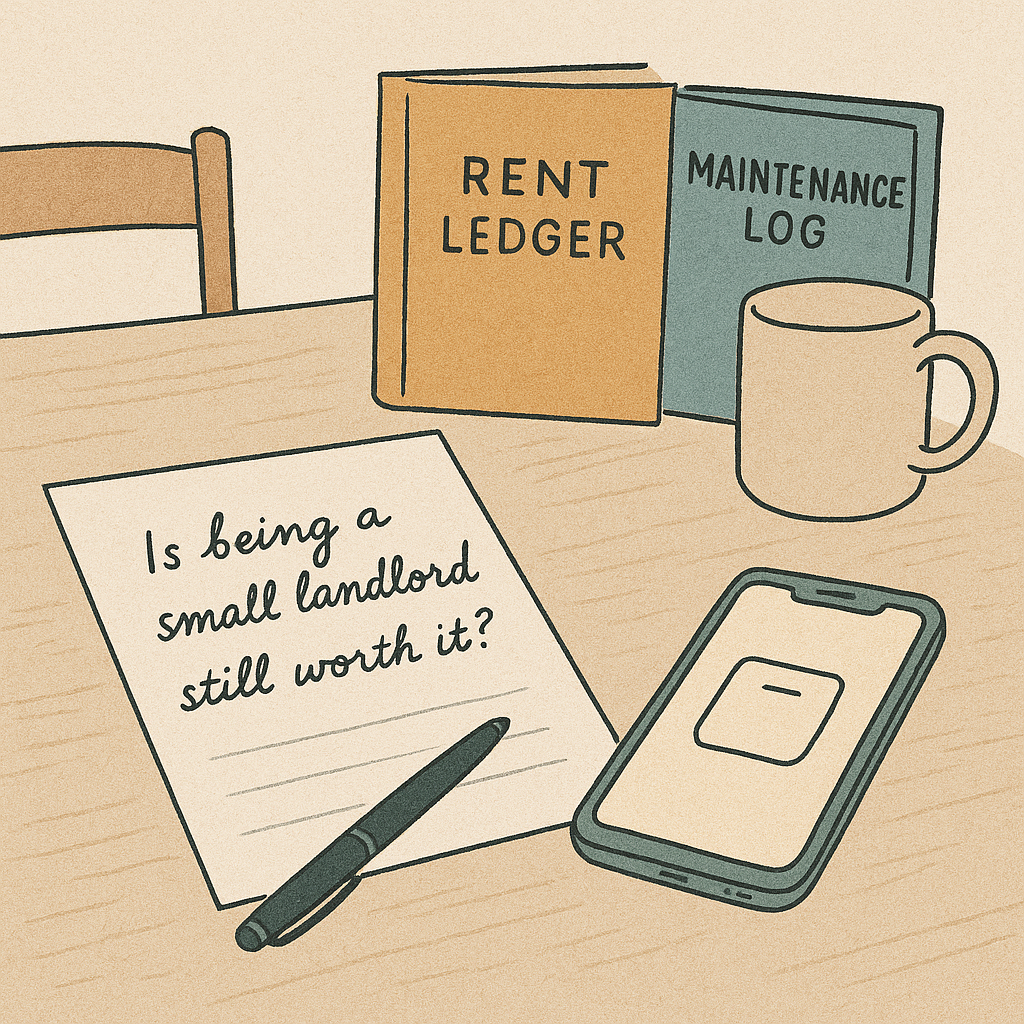
Is being a small landlord still worth it for you? If you’re managing one or two rental properties, you’ve probably started asking that question more than once in the last few years. The answer isn’t the same for everyone, and it isn’t a single metric you can measure with. It’s about balance—between financial needs, time, risk, and how your life has changed since you first pulled the trigger on rental housing. This piece focuses on one concrete question you can use to guide your decision:
What is the local return on keeping this rental vs. selling, when you account for time, money, and risk?
Rather than chasing a perfect measure, you’ll want a practical way to compare options. Below is a straightforward framework you can use to answer that question for each property you own.
The reality check: what counts as “worth it”?
Small landlords tend to feel the pull from several directions at once: steady income from rent, pride of ownership, and the ongoing labor required to keep a property livable. The “worth it” bar isn’t just about cash flow; it’s about whether the rental continues to align with your current goals and your tolerance for day-to-day work.
Ask yourself these practical considerations:
- Is the property contributing meaningfully to your overall financial picture, after debt service, taxes (as they apply to you), maintenance, and property management costs if you use them? If the answer is a loud maybe, dig deeper.
- Do you enjoy or at least tolerate the ongoing management tasks, or would you rather reclaim that time for other priorities? Time is a real cost, even when you’re not actively answering calls.
- Are vacancy risks, capital investment needs, and regulatory changes manageable or increasingly burdensome in your market?
- If you could sell, would you deploy the proceeds in a way that better supports your current life goals (retirement, other investments, travel, care for family, etc.)?
This isn’t a math puzzle you’ll solve with a single formula. It’s a process of estimating, then reconciling your answers with a realistic view of your property, your market, and your own energy level.
A practical decision framework
To move from a question to a decision, use this four-step approach. It keeps the process grounded and repeatable from property to property.
- Gather current numbers and plausible futures
- Current rent and recent vacancy pattern for the unit(s).
- Monthly operating costs (mortgage, taxes, insurance, HOA if any, maintenance reserve).
- Recent and expected CapEx (heating system, roof, appliances, turns between tenants).
- Any property-management costs if you’ve considered outsourcing.
- A rough estimate of selling costs and potential net proceeds if you were to sell now.
- Model three scenarios for each property
- Status quo: continue as-is with current rents and maintenance patterns.
- Sell: assume net proceeds, potential taxes, and reallocation of capital.
- Improve/adjust: make a targeted improvement (e.g., new appliances, cosmetic updates, energy efficiency) and project the impact on rent and vacancy.
- Compare the three outcomes in practical terms
- Cash flow and liquidity: how much free cash is the property generating after all costs? How will selling change your liquidity and future needs?
- Time and stress: how much time does the ongoing management require? Would you prefer to reduce hands-on duties by selling or hiring help?
- Risk exposure: how vulnerable are you to market downturns, interest rate changes, or unexpected major repairs?
- Long-term alignment: does the property support your broader goals (retirement strategy, debt payoff, wealth-building, or legacy plans)?
- Make a choice with a concrete plan
- If you keep it: set a clear maintenance plan, a vacancy strategy, and a budget for updates. Decide how you’ll handle turnover and what level of external help you’re comfortable with (broker, handyman, property manager).
- If you sell: outline the sale process, timing, and a reinvestment plan. Consider how to redeploy capital to align with current priorities.
- If you improve: specify the scope, cost ceiling, expected rent increase, and a deadline to reassess after the work is complete.
A concrete example: walking through one property
Let’s illustrate with a hypothetical duplex in a mid-sized town. Suppose you rent both sides for $1,300 each, with total monthly costs (mortgage, taxes, insurance, maintenance) of $1,400 per month, and a small reserve for vacancies. You’ve noticed the roof will need work within 2–4 years, and the kitchen appliances are aging.
- Status quo: Cash flow is modest, but you’re comfortable with the workload and the risk is tolerable. The neighborhood remains stable, but vacancy could rise if rents aren’t competitive.
- Sell: After closing costs, there’s a lump sum to redeploy. The challenge is finding a comparable investment with similar risk and a similar level of involvement.
- Improve: Replacing appliances and giving the unit a light refresh could push rent by $150–$200 per unit and possibly reduce turnover. If turnover costs and vacancy risk stay reasonable, this could raise cash flow modestly without selling.
If the improvement plan promises a better return and aligns with your time tolerance, it may be worth it to keep a property you know well. If the market looks like it could soften or if the return on improved cash flow isn’t compelling, selling could provide flexibility for future opportunities.
Practical steps you can take now
- Do a one-page property snapshot for each unit: rent, expenses, vacancy rate, and a rough 5-year outlook.
- List your personal time cost: how much time per week do you actually spend on tenant issues, maintenance, and administrative tasks?
- Talk to a trusted local contractor or handyman about likely upcoming repairs and realistic costs.
- Review your overall portfolio goals: are you trying to simplify, retire debt, or reallocate capital?
- Revisit insurance and tax implications with a neutral advisor or accountant you trust (not legal or financial advice, just a sanity check).
Helpful resources
- Tenant Background Screening Service - Quick, thorough screening can reduce turnover risks and eviction headaches.
- Water Leak Sensor - Early prevention of water damage saves time and money.
- The Essential Landlord Checklist Bundle - A practical guide for documenting condition at move-out.
- Smoke and Carbon Monoxide Alarm - Essential safety upgrades that can simplify compliance.
Helpful disclaimer
This is not legal or financial advice. Laws vary by location.
Landlord checklist bundle
Stop rebuilding your checklist for $5.
The bundle keeps turnover, move-in, maintenance, and move-out checklists in one printable place so you can stop improvising the same steps from memory. Instant access after checkout.
- Turnover prep checklist
- Move-in checklist
- Preventative maintenance checklist
- Move-out inspection checklist
One-time purchase. No subscription nonsense. Payments are live.